People ask me what stroke rate they should row at. The honest answer is that it depends on the job you're doing that day. Here are the rates we actually rowed in the Kiwi eight, and the ones I used on the erg before my 5:45 2k.
What stroke rate should I row at?
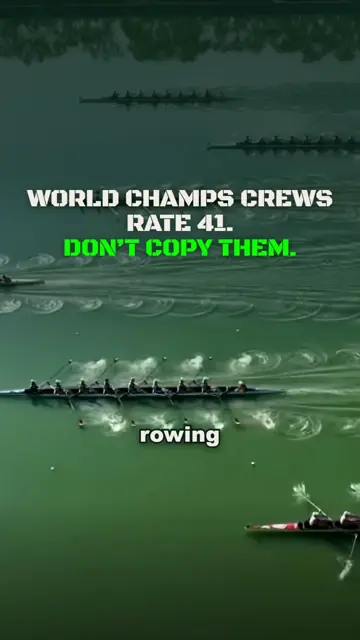
Stroke rate, or rating, is how many strokes you take a minute. There isn't one right number. A steady row, a hard rhythm piece, threshold work and a 2k race all want a different rate. Pick the rate for the job, then make every stroke at that rate count.
Here's what that looked like for us:
| What we were doing | Stroke rate |
|---|---|
| Steady row in the eight | 20 rate, cruising at 1:34 pace |
| Capped 6 x 2k pieces | 24 rate building to open |
| Power strokes in fours | 24 rate, 20 strokes as hard as you can |
| Threshold work on the erg | Around 28 to 30 rate |
| 2k erg race pace (me) | Around 37 to 38 rate |
Free tool: the training zones calculator gives you the split for each kind of work, with the rate to go with it.
The rate of the best row I ever had
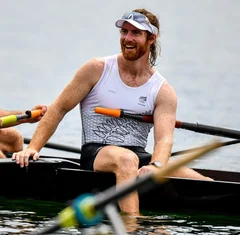
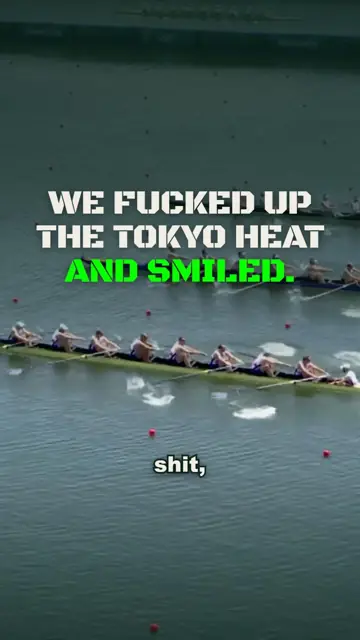
The most enjoyable row I ever had was on the Sea Forest Waterway in Tokyo. We had just qualified for the Olympic A final. The day before the final we went out in the morning for a 12k row, and it was the best rowing I've ever done in my life. Everyone was as fit as we had ever been, and everyone was rowing with confidence and absolute trust in each other.
"Sitting in this crew rowing along at 20 rate with a light little tailwind behind us just like cruising at 134 pace"
That's 20 rate. Nothing flash. What made it special was the easy speed and unreal rhythm. When I'm an 80 year old at the pub, that's the row I'm going to be talking about. More on the headspace behind it in optimal arousal before a race.
Capped rate: where you find your rhythm
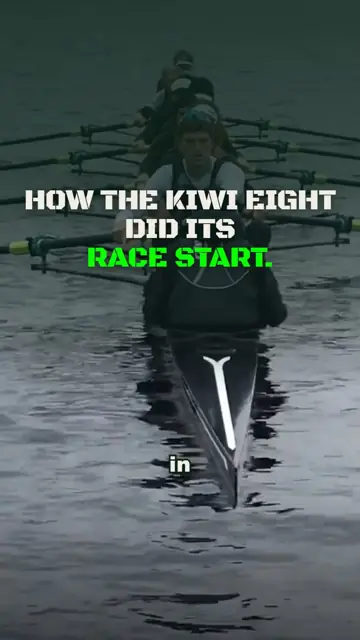
Capped rate pieces were our proving ground for whether we were nailing our rhythm before big events. In the 6 x 2k the first piece is at 24 rate, and that first one is where you hammer it. The rate climbs from there, piece by piece, up to open rate at the end.
"you are beating in your rhythm you're getting that big nasty rhythm going making it feel rock solid"
When you find that rhythm, remember what you were doing and capture it in words your crew understands. Then take those words into your next session. It's a session for near the end of the season, because you need a lot of fitness behind you to do it well. The full session is in the 6 x 2k that was the Kiwi eight's proving ground.
Power strokes at 24 rate
One of my favourite workouts in the eight was power strokes in fours. Stern four goes 20 strokes at 24 rate, as hard as you can. Then straight into 20 strokes bow four, then 20 strokes all eight. Repeat that six times, take a break, then do another six. That's 12 rounds.
"there would be no stops between the changes so you'd go stern four 24 rate 20 strokes as hard as you can"
Make it a competition: which four gets the best splits, then what numbers can the whole eight hit. It's a free licence to go ham and find the upper limit of what you can lay down in an eight, then the coach's job is to smooth the edges. Here's how to run power strokes in fours.
Best 2k erg strategy: rehearse your race rate
On the erg I'd ladder up through threshold pressure in my warm-up. Find a nice rating where you're not power stroking it, around 28 to 30 rate. Whatever you can hold for a max 5k or 6k is pretty close to your threshold.
Then I'd build into race pace work: 30 seconds on, 30 seconds off, four times.
"I would start at like solid pressure 32 rate then 34 rate then 36 rate"
The last one was at my race pace for the 2k, which was around 37 to 38 rate. With those pieces you're creeping closer and closer to your target split, with the final one right at your 2k split, and trying to make it feel easy. Just tap it along. The whole routine is in how to warm up for a 2k erg test, and how I split the race itself is in how to pace a 2k erg.
Common mistakes with stroke rate
- Thinking a higher number is always better. Our best row was at 20 rate, with easy speed and unreal rhythm.
- Power stroking your threshold work. Find a rating where it flows.
- Blasting splits in your warm-up. Warm up on the split you're trying to hold.
- Doing capped rate pieces like the 6 x 2k at the start of the season. If you do it before you've got the fitness, the wheels can fall off.
For more on racing, start at the racing topic page.
More from Shaun on this
Read the transcript
Hello, you tasty little Meataxe, I've got a good workout for you today. This is one that we used to hammer as a Kiwi eight before some big events, and it is six by two kilometre efforts. This was like the proving grounds of whether we were fucking nailing our rhythm, and so these are at capped rate. You do the first one at 24 rate solid, and then you do the second one at 24 rate first, 26 second K. Then the third one is at 26 first K, 28 third K. Then the fourth one, 28, 30. The fifth one, 30, 32. And then the last one, go 32 for the first 500, 34, 36, and then open right that last 500. And the intention behind this session is to fucking max every fucking 2k as hard as you can. That first one at 24 rate, you are fucking hammering it, like you are beating in your rhythm, you're getting that big nasty rhythm going, making it feel rock-solid, and then you're just backing that up for another five pieces as best you can. But this is definitely a session you do near the end of the season, because it's one that you need a lot of fucking fitness behind you to do well. If you do it near the start of the season, it can kind of, the wheels can fall off. So send this to a Meataxe or a Meataxe coach that needs to hear it.
Read the transcript
Hello Meataxe, here is the exact warm-up I did before doing a 5:45 2k erg on a Concept2. Takes about 20 to 30 minutes. The fitter you are, the longer it takes you to warm up. The first 15 minutes you are just building steady U3, U2 pace. Just making sure your system is firing and your legs are warm as fuck. Immediately after, just light easy paddle, get off the erg, do a bit of stretching, do a little bit of box breathing. You're then back on the erg and you're laddering up through your threshold pressure. So this is a part of the engine you need to get firing for a 2k. Now fuck, there's some science to it, but I'm just going to bro science it, saying we just need to turn on that engine. The threshold engine, that middle part of your kind of ability. Whatever your 5 or 6k pace is for like a max test, that is pretty close to your threshold, and then do one three minute piece at threshold pace. Now that's going to feel a bit fucked. Then paddle off for five minutes or so and then build into your race pace work. So I would just do simply 30 seconds on, 30 seconds off, times four. I would start at like solid pressure, 32 rate, then 34 rate, then 36 rate, and then I would be at my race pace for the 2k erg, which is around 37-38 rate. You should be kind of 30 minutes in and you should be feeling like sweaty and warm and like you've already done a workout, and then roll onto the erg and put your big boy or big girl pants on and fucking knock out some numbers on that thing. Let's go. So send this to a Meataxe who needs to hear it.
Read the transcript
Hello Meataxe, one of my favourite workouts in the eight was to do power strokes in fours. 20 strokes stern four, 20 strokes bow four, 20 strokes all eight, and then repeat six times, times two. So essentially it's like 12 rounds of that and there would be no stops between the changes. So you'd go stern four, 24 rate, 20 strokes as hard as you can, like really fucking sending it and swinging on that bitch. And so first of all it's like a competitive thing where you're trying to pit stern four and bow four against each other, who can make the boat go fastest, like who's getting the best splits, and then when the whole eight comes in, like what numbers can you hit. And a session like this is brutal, it's a bit of fun though, like it gets a bit of mongrel out of you. So yeah, a session like that gives you a bit of a free license to just go ham, it lets you off the leash a little bit, and with that you have this freedom to just fucking express yourself on the oar and just swing on the thing and not be too worried about rowing too perfectly. And then the coach's job is to take all that raw effort and raw speed that you're producing and just smooth the edges. That's the trick I think here, is that you use a workout like this to explore the upper edges of filth that you can lay down in an eight and then find ways to make it sustainable. So, send this to a Meataxe that needs to hear it.