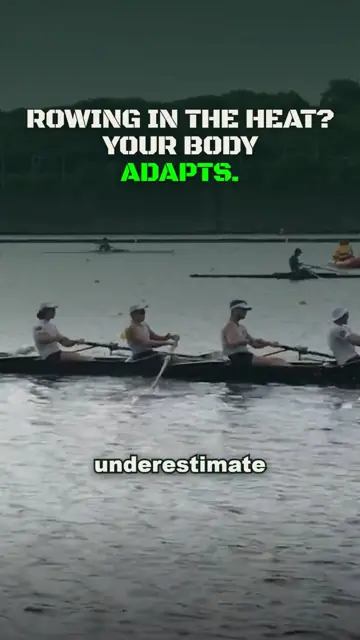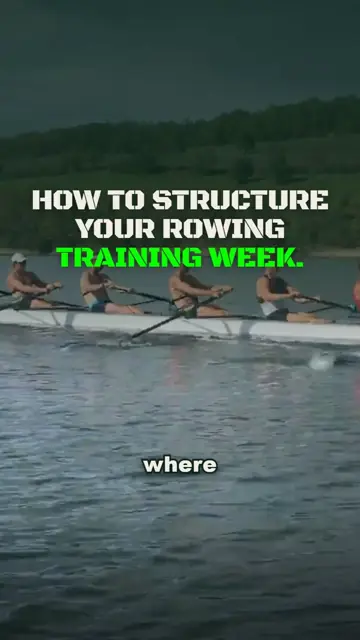
People often ask me how we started races in the Olympic Kiwi eight, as if there was a secret. There wasn't. It's probably really similar to what your crew does, and to what most school and club rowers do. The difference was in how we thought about each stroke, not in the sequence itself.
The rowing start sequence, stroke by stroke
Off the start you're moving a boat that's sitting dead in the water, so the first strokes are short and they lengthen as the boat picks up speed. Here's ours.
| Stroke | Length |
|---|---|
| Ready position | Sitting at the front at three-quarter slide |
| 1 | Three-quarter stroke |
| 2 | Half stroke |
| 3 | Three-quarter stroke |
| 4 | Three-quarter stroke |
| 5 | Full stroke |
"we just sat at three quarter slide and we went three quarter half three quarter three quarter full. Those were our stroke lengths off the start"
That's all it was. After those five strokes you're on full slide and into the race. If your crew uses a slightly different sequence, that's fine. The bit that makes it work is the next part.
A moment of patience on every stroke
What we thought about off the start was completing every stroke we took. When the gun goes, everyone wants to get to the next stroke as fast as they can. That's when crews rush up the slide and the start gets messy.
"just having a moment of patience when you're not trying to rush up to catch the next stroke"
That moment of patience sounds strange in the most frantic part of a race, but it's what keeps eight people together. Completing every stroke was one of the simplest cues we used in the eight, and it's at its most powerful off the start. I've written it up in full in complete every single stroke.
Let it build like a steam train
A steam train doesn't jump to full speed. It gets a bit quicker with every turn of the wheels until it's flying. That's how we wanted the boat to feel.
"You're just quicker and quicker and quicker and quicker and quicker until you're up to speed."
The mistake is trying to get the boat up to speed in one or two massive strokes. You can't. Each finished stroke carries some speed into the next one, and the speed stacks up. Rush a stroke and you lose what the last one gave you.
Give the start to a few people in the boat
For a long time Tom Murray, Michael Brake and I sat in bow three, and the start was our job. Our purpose was to get the boat off the line as fast as we could, so the rest of the crew could get on with the race. Owning one part of the race as a small group is a powerful thing, and it works in a four as well. More on that in building a team within your crew.
Be ready before the first stroke
A start can only be as good as the first stroke, and the first stroke depends on what you did before you got to the line. We wanted to be warm enough to take a race-quality stroke right off the pontoon, which is what warming up on the water is about. Your head matters too. Sitting on the start too dialled up makes you perform badly, so aim to be optimally aroused, not hyped.
The start isn't where the race is won
A clean start sets the boat up, but it doesn't win the race on its own. People ask about the Kiwi eight's sprint, but we didn't rely on it. We came through in the middle of the race, where races are won and lost, and we didn't speed up at the end. We slowed down less. That's the same idea I use when I pace a 2k erg. For the rest of the race plan, from rates to nerves, start at the racing topic page.
Common mistakes off the start
- Rushing up to the next stroke. It's the most natural thing to do and the one that costs you most.
- Chasing full speed straight away. Let it build. The speed comes stroke by stroke.
- Overcomplicating it. Our start in an Olympic eight was really simple. Yours can be too.
"That's the way we used to think about starts. It's really simple."