This is one we used to hammer as the Kiwi eight before big events. It was the proving ground for whether we were nailing our rhythm, and I reckon a crew should do it before a big event every single time.
What is the 6 x 2k rowing workout?
It's six 2km efforts at capped rate. The cap starts at rate 24 and climbs as the session goes on, until the last 500m of the last piece is open. The intention behind it is to max every 2k as hard as you can at the rate you're given.
Here's the full session.
| Piece | First 1k | Second 1k |
|---|---|---|
| 1 | Rate 24 | Rate 24 |
| 2 | Rate 24 | Rate 26 |
| 3 | Rate 26 | Rate 28 |
| 4 | Rate 28 | Rate 30 |
| 5 | Rate 30 | Rate 32 |
| 6 | 500m at 32, then 500m at 34 | 500m at 36, then open for the last 500m |
From piece two, each one starts at the rate the last one finished on and goes up two at halfway. The last piece climbs every 500m and finishes in a sprint.
How to row each piece
Piece one at rate 24 is not a paddle. You're hammering it, like you're beating in your rhythm, because the rest of the session is built on it.
"You're getting that big nasty rhythm going, making it feel rock solid, and then you're just backing that up for another five pieces as best you can."
From there the rate climbs every piece, and the job stays the same: as hard as you can at that rate. By piece six you're at 32, then 34, then 36, then open for the last 500. That's a sprint to the line on the back of five hard 2ks.
Why it's one of the best rowing workouts for a crew
It's a massive confidence boost before a big event, and it helps you find the bedrock rhythm your crew needs. It's a great session for building in your big nasty rhythm and then consolidating your crew.
Somewhere in the session you'll have a moment where it clicks. It's still so hard, but you're finding ways to make it sustainable and you're finding boat speed. When that happens, remember it.
"Remember what you were doing and capture it in words that your crew understands."
Then go out for your next session and start talking about those words, so you can find that rhythm again.
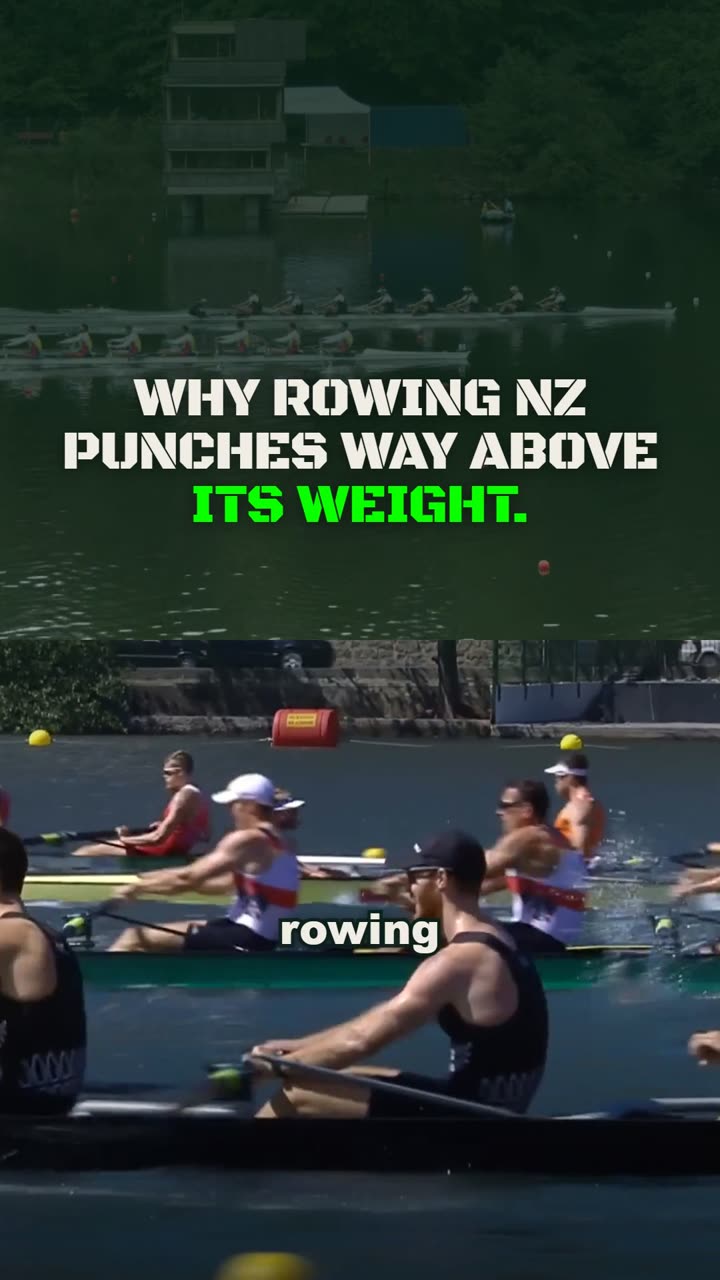
In the New Zealand team, 6 x 2k efforts were one of the squad pieces we used to compare every crew in the programme. I explain how that worked in why New Zealand rowing punches above its weight.
Where it fits in a rowing training plan
This is definitely a session for near the end of the season. You need a lot of fitness behind you to do it well.
"If you do it near the start of the season, the wheels can fall off."
We used it in the lead-up to big regattas, when the fitness was already there and we needed the rhythm locked in. Put it late in your season, in the build-up to the races that matter.
If you're getting ready for a 2k erg test rather than a regatta, that's a different job. Here are the two erg sessions I did before every big 2k. And if this one sounds hard, have a look at the hardest erg session we did in the Kiwi eight.
Common mistakes
- Doing it too early in the season. Without the fitness behind you, the wheels can fall off.
- Cruising the first piece. Rate 24 sounds easy. It's the piece where you beat in your rhythm, so hammer it.
- Finding the rhythm and then losing it. If something clicks, put it into words straight after, so the crew can find it again next session.
Send this to a Meataxe, or a Meataxe's coach, who needs it. If you're not sure what a Meataxe is, start with what a Meataxe rower is (not a meathead).