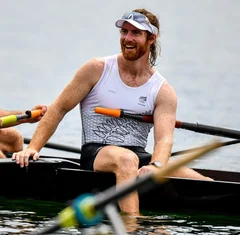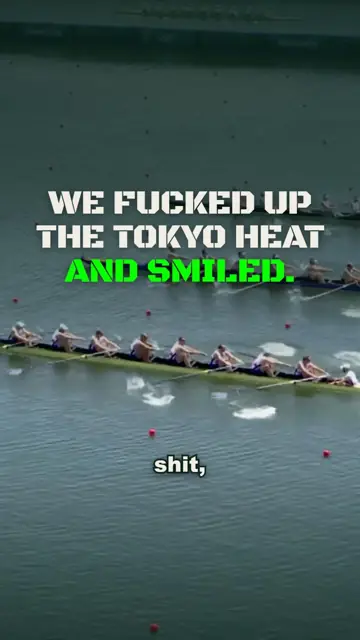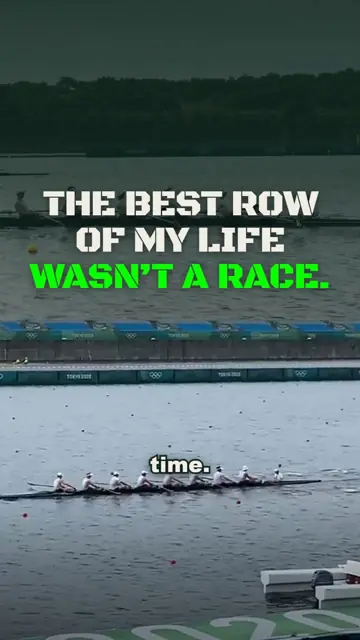
Callum from Prowject Fast put the Tokyo final on his screen and asked me to talk through what I was feeling, stroke by stroke. This is the plan we raced, in the order it happened.
First 500: get off hard and stay in touch
We weren't that strong in the first 500, so our main goal there was not to get dropped. Get off hard, get off efficient, and stay in touch with crews like the British, who were so fast over the first 500, and the Germans as well. We were okay with being a little bit behind.
We had a limit for it. We knew we couldn't get dropped by more than half a length, and we were really happy if we were within a canvas or a quarter of a length.
"we knew how strong our middle k was"
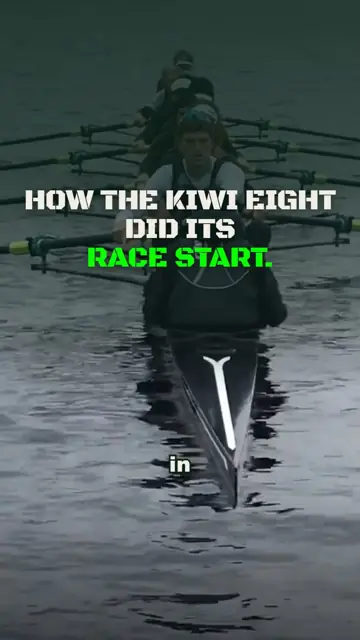
We were more concerned about our own race, getting from point A to point B as fast as we knew how. How we built the first strokes is in the race start.
The 250: come down onto the rhythm
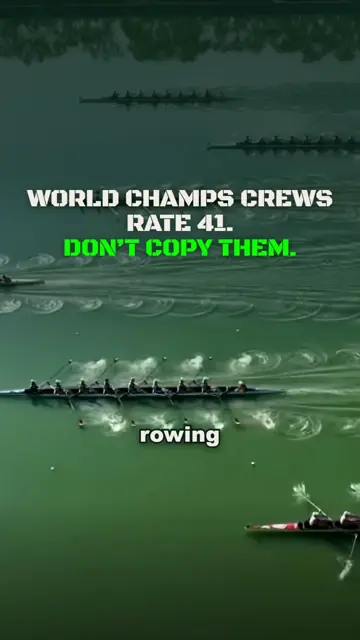
Coming through the 250 we had a really distinctive call to get onto our rhythm, with our coxswain calling us down to race pace. At that point we were probably at 40 rate. It felt pretty good, but we knew we were more efficient at about 37.5 or 38, and in an Olympic final that feels low. I've written about why we didn't chase a high rate.
We called it the big boy rhythm. We weren't rating overly high. We were getting a lot on at every stroke, aggressive with the drive off the front and then the swing through. There was so much time between each stroke that it felt like we were letting the boat run for eons, to the point where I wondered if we were rating 30.
Second 500: hold more of your speed
About here every other crew began to slow down a little bit, and we slowed down less. It's the same idea I use to pace a 2K erg. We had a really good rhythm, we were really fit, and we had a touch more boat speed than everyone through the middle of the race.
Out of the corner of my eye I could see a green boat, the Germans, and I could sense we were right beside them. I had no idea we were marginally in front at the 1k mark.
"I just knew that we were actually in the race, which is a great place for us to be."
Third 500: use your best part
"the third 500 was always our best part"
We always felt pretty mean coming through the third 500. The problem in earlier years was where we started it from. It was a very rare occasion that we were side by side with anyone at that point. Often we were half a length or a length back. We'd move up on crews, but we'd left ourselves too little time to really catch up.
The Tokyo eight stayed in touch through the first 500, so this time we could unleash the third 500 and do a bit of damage.
It was very much a one stroke at a time feeling. I was rotating out to the left, so I could see the American boat, and I remember thinking that whatever I do, I'm going to push them away as far as possible. Just keep hammering the foot plate. I had no real idea where the Dutch, the Germans and the British were on my right. All I knew was that we were ahead of the Americans, who are a really fast crew.
Last 500: hold the rating and stay long
We had a game plan for how we wanted the last 500 to unravel. We'd also found we were quickest over the last 500 when we just held our rating, maybe went up one or two beats, and stayed really long.
"if we just stayed long we would maintain or increase speed quite well"
We were all so fit by then that length did the work. I could tell from the tone of Sam's voice in the cox seat that the British were moving, and the Germans had quite a powerful last 500. Even then we were underrating those two crews, sticking to our plan, holding length and holding them off.
I don't remember much of that part, to be honest. It all felt like a blur. I remember taking quite a dirty stroke in the last 100 metres, but luckily it didn't mean anything.
Crossing the line without knowing we'd won
You hear the beep of the first crew crossing the finish line.
"And I really wasn't used to that beep being my crew."
So I kept on rowing through the line. Then I was lying down, asking Phil where we came, because I couldn't register it in my brain. He was the one who told me we'd just won.
That final came after a heat we got wrong, and that story is in how we lost the Olympic heat and still won.
How to build your own race plan
Here's what ours came down to:
- Name where you're weakest and put a limit on it. For us that was half a length in the first 500.
- Name your best part of the race, and plan the early race so you arrive there in touch.
- Come down onto the rate your crew is most efficient at, even when it feels low.
- In the last 500, do what has been quickest for you in training. For us that was holding the rate and staying long.
For the day itself, from the meal to the warm-up, see my race day routine. Everything else on racing is on the racing page.
More from Shaun on this
Read the transcript
I did get the sense that like the race was starting to close in on us a little bit like I could get the sense from like Sam's tone of voice that you know the British were moving here and I think they did start to creep back and then the Germans had like quite a powerful last 500 and so yeah I don't really remember this part of the race for being totally honest we were we were fucking sending it it all felt like a bit of a blur you get the sense that we're like near the front and you know we're giving it absolute beans in this last part I remember taking quite a dirty stroke in this last like 100 meters, but luckily didn't really mean anything. And yeah, it took me so long to fucking come to terms with the fact that we had won because you know, you hear the beep of the first crew crossing the finish line. And I really wasn't used to that beep being my crew. And so I kept on rowing through the finish line. And then at this point here, I'm lying down, I'm asking Phil, where did we come? I'm like, where the fuck did we come, Phil? Because I just, I couldn't register it in my brain. And he's telling me right now in that moment that we had just won. And yeah, man, just felt like a dream come true, really.