Drew Ginn asked me on Mercantile Radio how I managed myself on the big occasions, and how I managed myself in Tokyo. I'm not going to lie, I was bricking it. Honestly, I was shitting my pants the night before the final, lying in one of those cardboard beds trying to sleep. Part of it was that I felt like this was going to be my last race.
What to do the night before a rowing race
I always doubt myself before an important race or an important erg test, no matter how much preparation I've done. Whether I've done enough training. Whether I'm worthy to win the race.
"I always doubt whether I'm gonna be able to pull it off"
That feeling stuck with me my entire rowing career, and I reckon most rowers, if not all, have it. So I stopped trying to argue with it. In Tokyo it always came down to one thing. I'm in seven seat of a rowing crew, so what is my job?
"My job is to back up my stroke man and to connect the rest of the crew to the rhythm and just to be consistent and just to be like rock solid."
I was like, okay, I can do that. Whatever your seat is, find the version of that sentence that's yours. Here's what each seat in an eight asks of you if you're not sure.
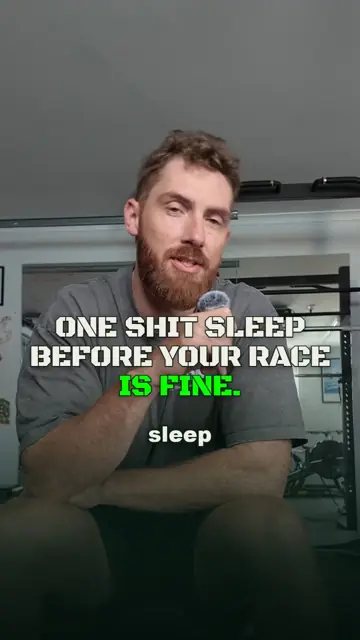
Then let the sleep go. A guy who specialised in sleep once told our team that one bad night before a pinnacle event makes next to no difference, and that gave me immense comfort. Drew was the same in 1996. James Tomkins was relaxed and talking about reading car magazines, Drew was awake into the early hours, and they were up again before dawn. The full story on that is in sleep for rowers.
"you just never feel more alive than in those moments"
Stop watching the other crews
Rowing is a great sport in the fact that you have no control or impact on what your opposition are doing. It makes the sport really simple. So unfollow any crews you're directly racing against on social media. Seeing what they do is only a distraction, and it will sow seeds of doubt if you let it.
"you can only control what's in your boat"
The same goes for the boat park on the day, which is why sizing up the opposition is a waste of energy.
Race morning: count back from your start time
A really annoying thing before any big race is getting the timings right: your food, your warm-up and everything in between. This is the order we used in the Kiwi eight before an important race. Write your race time at the bottom and count back.
| Before the race | What happens |
|---|---|
| 3.5 hours or more | Off the water from the morning pre-row |
| 3 hours | The big feed |
| Until 1.5 hours | Chill |
| 1.5 hours | A little stretch or a light walk |
| 1 hour | Erg warm-up, active stretching, a quick team meeting |
| 40 minutes | Meet at the boat |
| 35 minutes | Hands on the boat |
| 30 minutes | Push off for the warm-up on the water |
"these are the controllables that stack the odds that you can have a good performance"
Should you row on the morning of a race?
We did. The pre-row is generally 4 to 8k of easy zone 2 rowing, and then maybe a couple of bursts. Expect that it's not going to feel perfect. The whole idea is to shake things out, the nerves included. Afterwards we'd reiterate the game plan for the day and the race plan. We had that race plan decided well in advance, so the morning was only for going over it again.
What should you eat before a rowing race?
A big carb-heavy meal, 3 hours out, enough to fuel the body for a sustained period. Mainly carbs, with a good mixture of fast- and slow-digesting carbs, a little bit of protein and a little bit of fat. Make it a decently large meal. There's more on eating for training in rowing nutrition.
The last hour before the start
An hour out, you're on the erg and just moving. Start with easy steady state and build up to zone 2, add a couple of threshold pieces, then finish with a couple of bursts at race pace. You should be coming off the erg after about 15 or 20 minutes of work. My 2k erg warm-up has every step.
Do some active stretching so you can get into the rowing position nice and relaxed, then catch up as a team. When we met at the boat, 40 minutes out, we'd run through the plan again. We wanted it really simple, and really focused on what we could control. If you're too dialled up by then, that's the moment for box breathing.
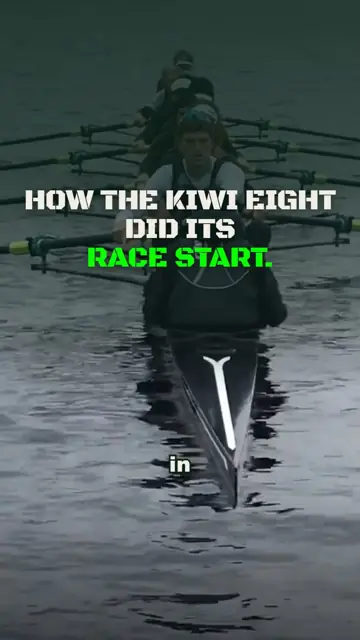
On the water, we'd build in fours, come together as an eight for some steady paddle, row a few pieces at a lower rating, then fire things up towards race pace and build through our starts. The aim is that your first stroke is race quality. Then we'd line up in the start blocks, make our final adjustments and go. What happens next is in the race start sequence we used.
Common mistakes
Trying to win the whole race in your head the night before. Bring it back to your job in the seat.
Changing the plan on the morning. Decide it well in advance and keep it simple.
Leaving the timings to chance. Write them down and all you have to do on the day is follow them.
The full countdown, with every piece of the erg and on-water warm-ups and room to fill in your own times, is in the free race morning download. More on what we did on race day is in racing and race plans.
More from Shaun on this
Read the transcript
do you doubt yourself before an important race or an important erg test yeah same i always doubt myself no matter how much preparation i've done i always doubt whether i'm gonna be able to pull it off whether i've done enough training whether i'm worthy to win the race that is something that has stuck with me my entire rowing career honestly I reckon most rowers if not all have that feeling and yet we can still fucking do it I don't know where I'm going with that one
Read the transcript
Hello you glorious me that'sers. You know rowing is a great sport in the fact that you have no control Or impact on what your opposition are doing. Like you can only control what's in your boat And I used to love that about the sport It makes the sport in a sense really simple So I have a top tip for you. I want you to unfollow your opposition on social media. Any cruiser you're directly racing against you don't even need to know what they're doing. You seeing what they do is only going to be a distraction and you have no control over it and it will sow seeds of doubt if you let it. So give to go. Unfollow your opposition. Focus on your crew. Keep it simple and just enjoy the process of building a team. So send us to a main accident to hear it.