Zone 2 training is the base of everything we did in rowing. But I've made the same mistake plenty of times in an eight: everyone's happy with their heart rate, and the boat is going like rubbish. Here's how I think about zone 2, and when to back yourself to push a bit harder.
What is zone 2 rowing?
Zone 2, which we called UT2, is your low heart rate work. It's the type of heart rate where you can still kind of talk while you're exercising. On the erg it's the pace where you could sit there and hold a conversation with your mate beside you.
"UT2 training, zone 2 training is foundational."
You need so much of it. Something like 70 or 80% of your training needs to be at that lower heart rate. That's a lot of hours of rowing that doesn't feel hard, and that's the point.
How to build up stamina for rowing?
Build your engine with heaps of zone 2, for a long time. Stamina in rowing doesn't come from smashing yourself every session. It comes from stacking up the steady work, week after week, year after year.
Look at Hamish Bond. He has a massive aerobic engine that he's built over 15 years. Every stroke he gets a few more percent out of it than others, and that adds up to boat speed. More on how he rows in what makes the boat fast.
The other thing I wish I'd known sooner is that not every erg session needs to be a full send max.
"this is the engine building stuff. You're working with the machine, not against it."
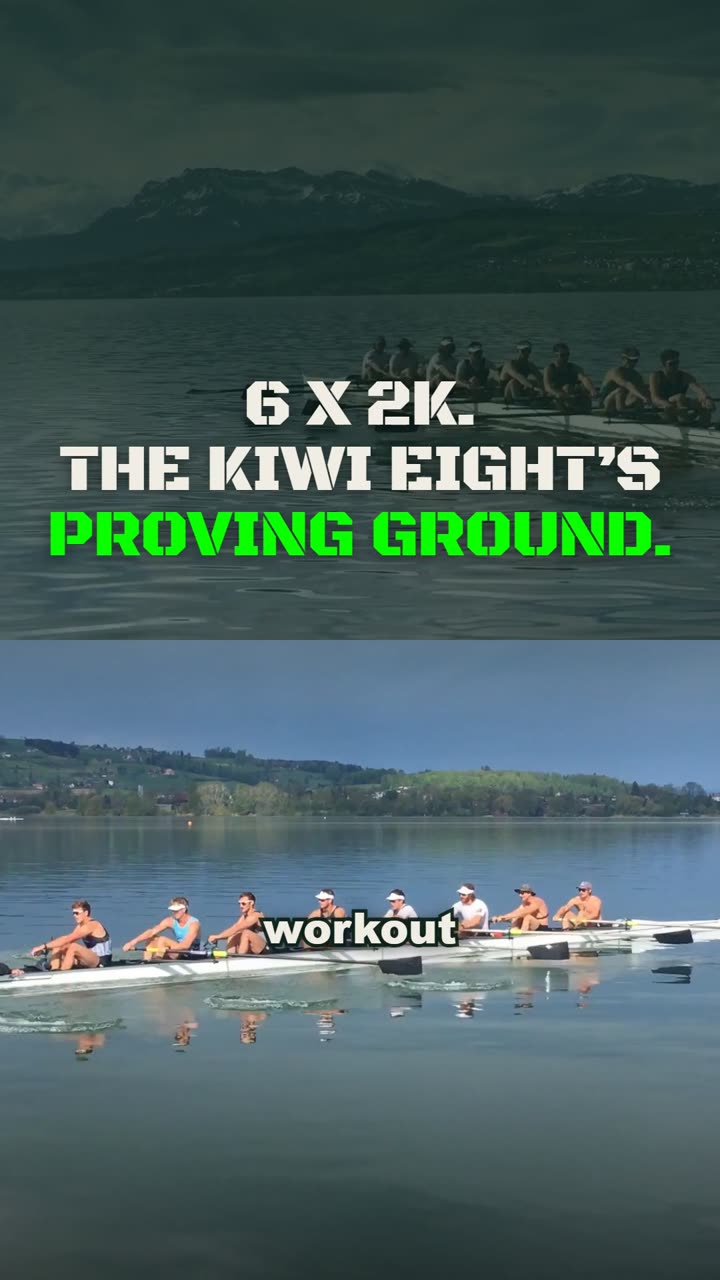
If you're dreading the long ergs, that mindset helps. I've written more about the mental side in how to get through hard erg sessions. Then save the real pain for the sessions built for it, like the hardest erg session we did in the Kiwi eight.
What is a good speed to row at?
For most of your training, a good speed is one where you can still talk. That's your zone 2 pace. Don't worry about anyone else's split. Your zone is your zone.
On the water it gets more complicated, because you're not on your own. In a crew boat, the right speed is the one where the crew is moving together, and sometimes that isn't the pace your heart rate monitor tells you.
When the heart rate is right but the boat feels wrong
This is the mistake I made so many times. We'd have an eight going quite averagely, and we'd be telling ourselves it was fine because we were in our zone 2. We were at 140 heart rate.
"we needed to work a bit harder to find that cruising altitude of that crew"
If you're out on the water and the boat is going badly and you're saying to yourself, "that's fine, I'm in my heart rate zone", I don't think that's good enough. Sometimes the crew needs a bit more effort, a bit more energy and a bit more intent to get the boat singing. Then once it's moving together, it gets easier to hold.
So yes, zone 2 is important. But ask yourselves what is most important right now.
"Stick into my heart rate zone right now or getting a crew aligned pushing a bit harder and getting that boat singing a bit better."
Have the conversation with your crew
"I think that you need to have an honest chat with your crew around what the priority is."
Before a steady session, talk about it with your crew and your coach. Is today about holding the heart rate no matter what, or is it about getting the crew aligned? Both have their place. The mistake is never asking.
This matters even more for powerful rowers. If you're a big unit, pushing harder can mean ripping the boat round instead of moving it together. More effort should mean more intent as a crew, not one person showing everyone how strong they are. I've written about that in how a powerful rower should use their power in a crew boat, and there's more in the training topic page.
Common mistakes
- Hiding behind the heart rate monitor. Being in your zone doesn't make an average boat okay.
- Sticking to zone 2 stubbornly. Make the judgement call. Sometimes the boat needs more.
- Never talking about it. Agree as a crew what the session is really for.
- Turning every session into a full send. The opposite mistake. Most of your training belongs at a heart rate where you can still talk.
- Pushing harder on your own. More effort works when the whole crew finds it together.