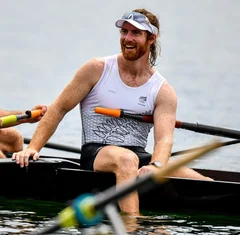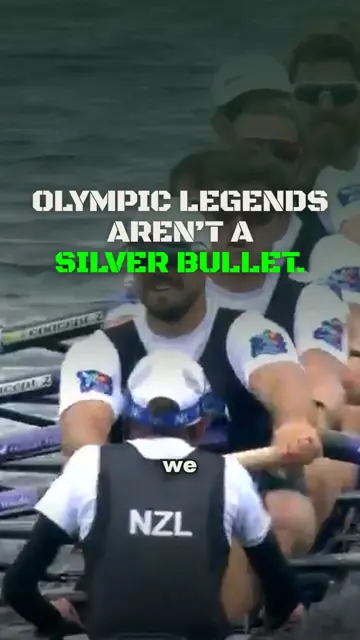
Tony O'Connor was our coach when we won Olympic gold in the Kiwi eight. People ask what made him a good rowing coach, and for me it comes down to one thing: Tony coached the person first, not the rower.
What did Tony O'Connor do differently as a rowing coach?
Tony was the type of coach who looked out for the athlete first, and he set up all the support around an athlete to make sure they were happy doing what they were doing. He would almost look at everything around rowing first. Were you being supported in the right way? Were you in a good headspace? Did you feel comfortable enough to talk to him or your teammates?
"He was the type of coach that would check in with you to see how you're doing, to see how things are at home."
That might not sound like high performance coaching, but it worked for us.
Why coaching the person worked for our eight
Our crew never needed a coach to stand on the bank and tell us to work harder.
"We never had the problem of, we need to get told how to work hard. We knew how to work hard."
There was some stuff peripheral to rowing that was really letting us down, and that's what Tony was able to identify and offer support through. He saw it, and he backed us through it.
"He would have a very holistic approach to rowing, to coaching the person first, not the athlete. And thus, athletic performance came as a result."
That's the lesson. Look after the person, and the performance comes. That was the eight that blew our heat in Tokyo and then won gold.
Two good coaches, two different styles
Before Tony, Ian Wright coached our under-23 men's eight, and he was a very different coach. Ian trained us hard and was brutally honest with his feedback, and I responded really well to that. He's the coach behind the pause at the finish. That type of coaching is not for everyone, and it does put a lot of stress on athletes. But Ian also knew when to push hard and when to back off and give us a bit of space.
"Ian would give you these little reprieves or a session off that would just come right at the right time."
Both of them were good at reading people. Ian read when a tired crew needed a session off. Tony read what was going on around the rowing. Neither style is the only way to coach, and I have a lot to thank both of them for.
Drew Ginn asked me about both of them, and about Noel Donaldson, on Mercantile Radio.
How to be a good rowing coach: what I'd take from Tony
If you coach a crew, a club squad or a junior programme, this is what I'd copy from Tony:
- Check in on the person. Ask how they're doing and how things are at home, not just how the session went.
- Look around the rowing. Are they supported the right way? Are they in a good headspace?
- Make it easy to talk. Your rowers should feel comfortable talking to you or their teammates.
- Don't assume hard work is the problem. If your crew already knows how to work hard, look at what's letting them down off the water.
- Set up the support. Make sure your athletes are happy doing what they're doing.
- Know when to push and when to back off. That's the bit I took from Ian.
If you're the rower
You can't make your coach be Tony, but you can be honest with your coach and your crew when something outside the boat is dragging you down. That's what Tony was asking for when he checked in. For more on the side of the sport that isn't about results, read what rowing gives you for life, win or lose.
Common mistakes
- Coaching the athlete and forgetting the person. The stuff around rowing can let a crew down as much as anything on the water.
- Telling a hard-working crew to work harder. We knew how to work hard. That wasn't what we needed.
- Thinking there's one right way to coach. Ian and Tony were very different coaches, and we won with both.
There's more on how crews work on the crews and eights topic page. Tony's a legend.