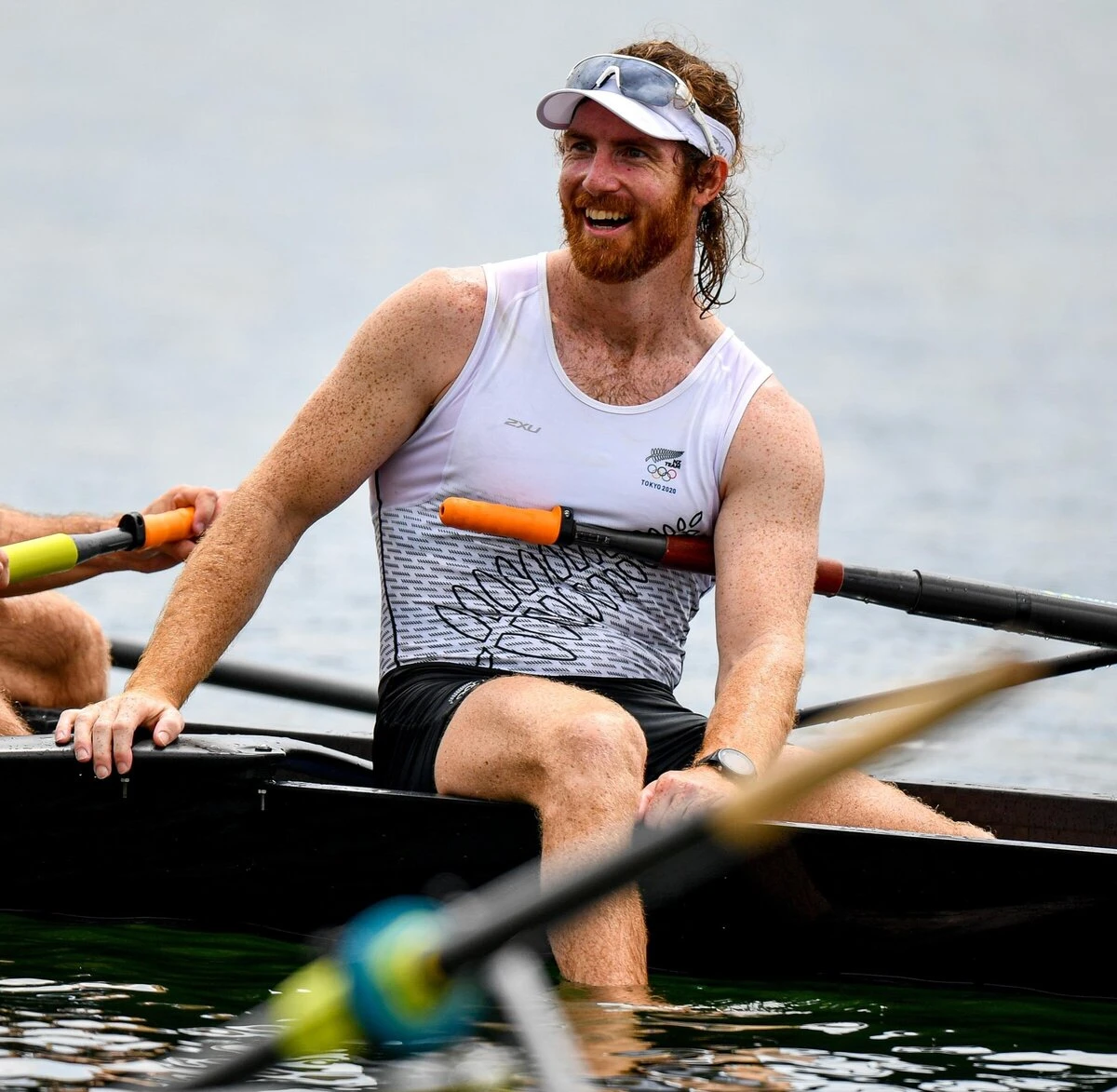
These are the 2k erg scores I pulled from age 14 to 28, one for each age, right up to the Tokyo Olympics. They're not averages. They're mine, and they show two things: how fast the early gains come, and how long you can sit on a plateau.
My 2k erg times by age
| Age | 2k erg time |
|---|---|
| 14 | 7:04 |
| 15 | 6:50 |
| 16 | 6:33 |
| 17 | 6:19 |
| 18 | 6:16 |
| 19 | 6:04 |
| 20 | 5:59 |
| 21 | 5:54 |
| 22 | 5:50 |
| 23 | 5:51 |
| 24 | 5:45 |
| 25 | 5:46 |
| 27 | 5:45 |
| 28 | 5:46 |
A full minute came off in the first five years, from 7:04 at 14 to 6:04 at 19. I broke six minutes for the first time at 20, and every 2k I did after that was under six. My PB was 5:45, and I broke 5:50 about ten times.
After that it was a grind for seconds. From 22 to 28 I sat between 5:45 and 5:51, the best part of seven years. I turned 29 on the day of our Olympic repechage in Tokyo, so I don't have a 2k score past 28. That repechage is a story of its own: we blew our Olympic heat, then won gold.
What does a 2k erg plateau look like?
Coming into the under-23 team for New Zealand and then the elite team, I was making big gains over and over again. It was exciting.
"I was knocking seconds off my 2K left, right, and centre. I was getting faster and faster."
Then I hit a ceiling, and I kept hitting it for about four years. You can see it in the table: I pulled 5:45 at 24 and never went faster. My sticking point years were roughly 2016 to 2019, when the eight was struggling too. I got really disheartened that there wasn't a straight line where I just kept getting better.
Is a 2k erg plateau normal?
Yes. I wish I'd known that earlier. It's just part of the game.
I reckon there's a sticking point in a lot of athletes' careers. It comes at different times for different people, but if you stick at the sport long enough, you'll probably hit a glass ceiling you need to bust through.
"Often the improvements at that point are getting so small that you don't even recognise them."
Then other things start happening. I started getting quite negative about my progression, which made it slow down even more. You might still be improving, but something else is holding you back. For me it was the negativity. I'm a big believer that you can train your self-belief.
How do you get your 2k erg moving again?
Rowing is a pretty simple sport, and when you're in the thick of it you'll do your best to overcomplicate it, especially if you're an overthinker like me. One thing we used to say in the Kiwi eight was to trust the process.
"Trust that what you're doing right now, the hard work that you're putting in, if you stick to it, if you stay as positive as you possibly can, day in, day out, and just keep on turning up, that you will get the progress you are looking for."
But you have to be patient. Every athlete is going to hit a sticking point, and when it happens, it's your ability to keep turning up with a positive mindset that gets you through it fast.
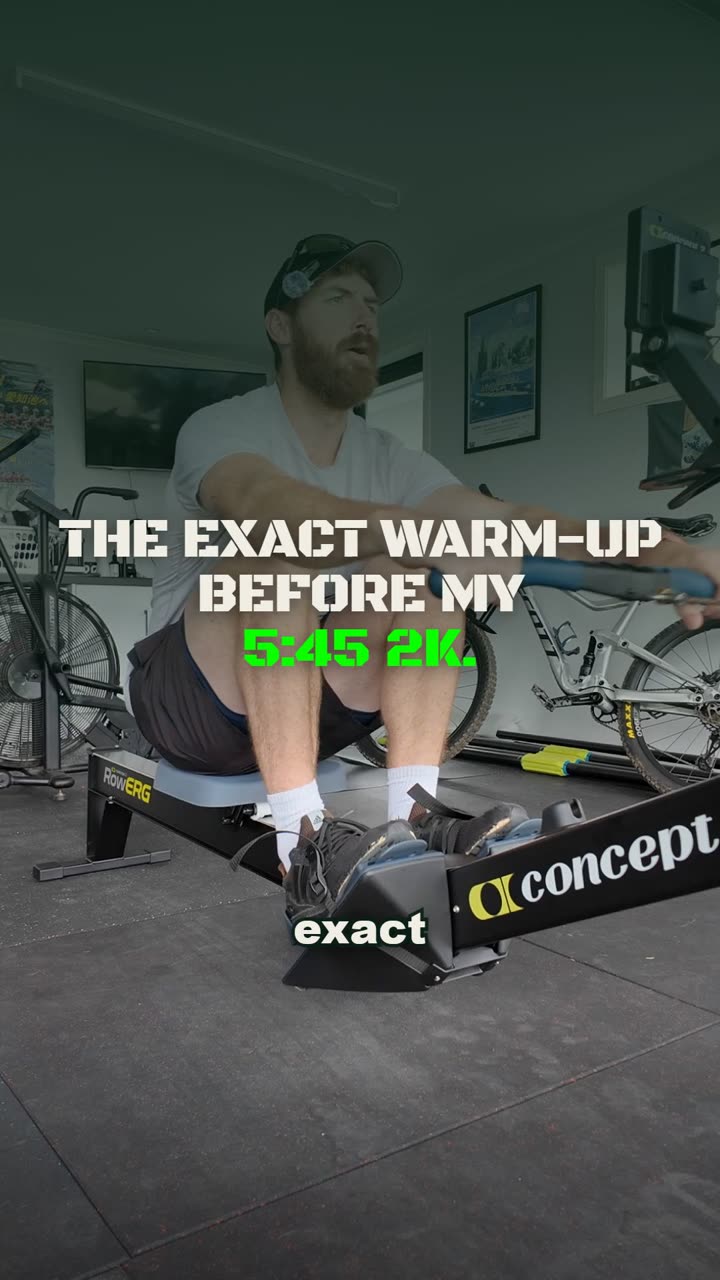
For the 2k itself, I think two things matter most: doing the training, and your confidence. Doing the training is simple. Turn up every day, get on the water, get on the erg and put in the reps. Confidence is the bit people get wrong. I built mine with the two erg sessions I did before every big 2k and the exact warm-up I did before my 5:45.
What is a good 2k erg time?
Everyone wants averages by age. All I can give you is mine, and honestly, they're not the numbers that matter for you. The only person you're competing with on a rowing machine is you. The numbers that matter are you against what you've done in the past.
Sure, use your mates as targets and hunt people down. I love that. But if the nerves and the self-inflicted pressure of the machine are getting to you, remember you're just competing with another version of yourself, chasing small gains. Be a bit kinder to yourself. If test day nerves are your problem, here's how I'd get my head right before a 2k.
Free tool: put your last 2k time into the erg calculator to see its split and watts.
Common mistakes
- Expecting a straight line. The big drops come early. Later the gains get so small you don't even notice them.
- Getting negative about it. I did, and it slowed me down even more.
- Overcomplicating it. Rowing is a pretty simple sport. Keep turning up and do the work.
- Judging yourself on other people's numbers. Your last score is the one to beat.
More from Shaun on this
Read the transcript
One thing I really struggle with in the sport of rowing is the fact that your progress isn't linear. I found early on in my career, when I was coming into the under 23 team for New Zealand and then moving into the elite team for New Zealand, I was knocking seconds off my 2K left, right, and center. I was getting faster and faster. And then I just had a ceiling. And I kept hitting that ceiling for four years. Like I just got stuck and I wish I knew earlier that that's just fucking normal. That's just like part of this game and often the improvements at that point are getting so small that like you don't even recognize them and then other things start happening like you start getting, for me, I started getting quite negative about my progression which then made my progression slow down even more but one thing that we used to say in the Kiwi 8 is just to trust the fucking process. Just trust the process. Trust that what you're doing right now, the hard work that you're putting in, if you stick to it, if you stay as positive as you possibly can, day in, day out, and just keep on turning up, that you will get the progress you are looking for. But you have to be patient. So send this to a Medax who needs to hear it.