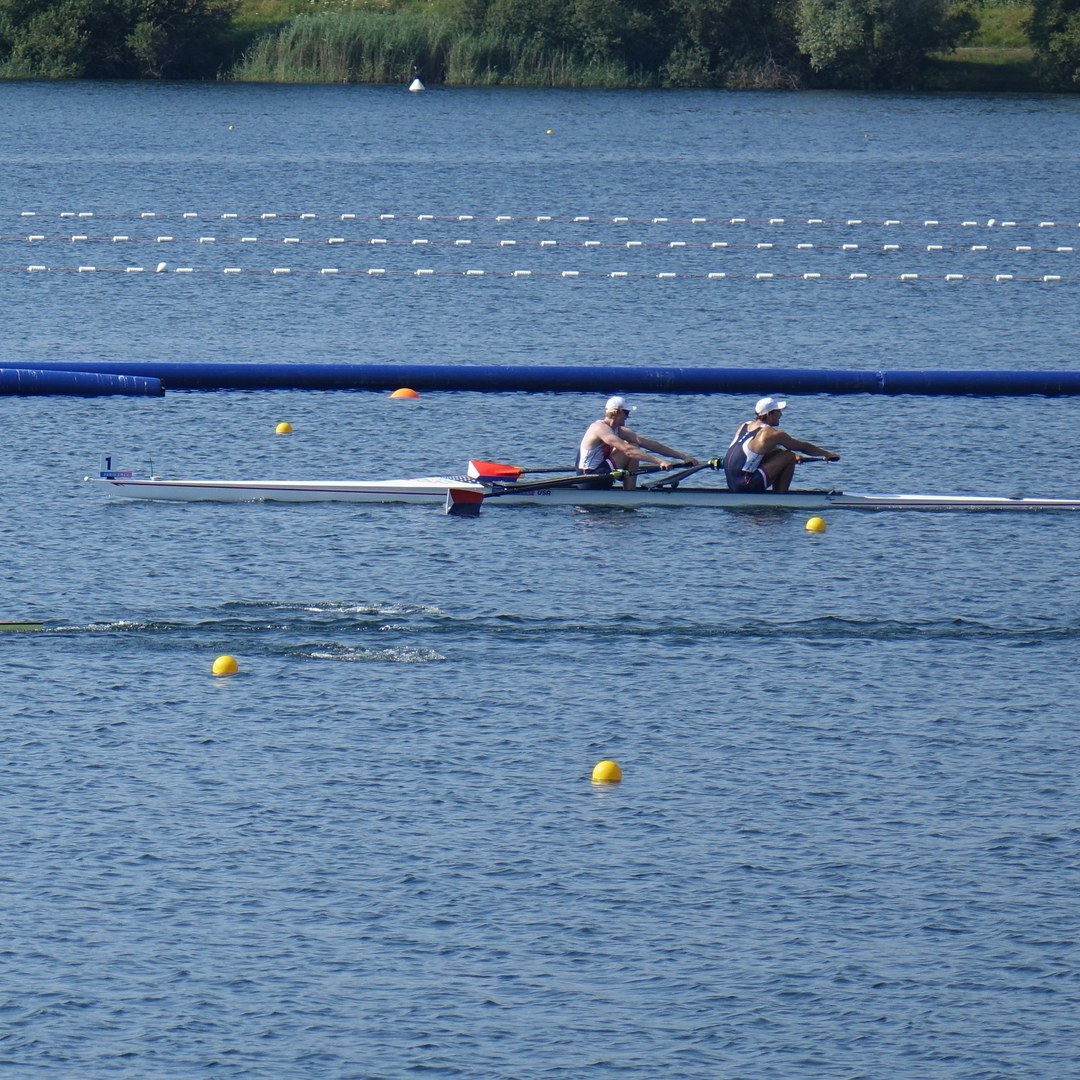
The pair is the boat with nowhere to hide. There are two of you, one oar each, and whatever one rower does the other feels straight away. So when row2k asked the pairs medallists at the first USRowing Small Boat National Championships what makes a pair work, the answers are worth a read for anyone who rows in a crew.
The regatta was raced on Mercer Lake in West Windsor, New Jersey, and USRowing's report says 15 national champions were crowned on the Sunday. Pieter Quinton and Chris Carlson of the USRowing Training Center in Sarasota won the men's pair, and Holly Drapp and Margaret Hedeman of the Training Center in Princeton won the women's pair. row2k's John FX Flynn spoke to them and to some of the college medallists, and published the answers on 18 November 2026.
Nobody talked about rigging or blade work. Every answer was about how the two people work together.
Talk to each other
Holly Drapp put communication first: being able to tell your partner what you are working on and what you are thinking, then using that to get through practices and races, debrief and set targets. Her second point was to take each day as it comes, learn from it, and not be too hard on yourselves after an off day.
One of the college medallists made the same point from the other end. Her pair only trained together two days a week and had probably only practised 15 times before the regatta, so there was no time to leave things unsaid. If something wasn't working, they had to talk about it and sort it out in that session.
Small changes, not big ones
Margaret Hedeman, Drapp's partner, talked about the sticking points. There will be a day when nothing clicks, practice is slow, and you are frustrated with yourself or your partner. What she and Drapp have worked on is seeing that the fix is usually not drastic. It is one small change to focus on, and you tell your partner how you are feeling so you can get through it together.
Trust, and one way of rowing
Pieter Quinton said his pair with Chris Carlson runs on trust and on a shared understanding of how they want to row and how they want to race. The two have rowed together for a number of years, and he said that shows on race weekends.
Devan Godfrey of the University of Washington, who took the collegiate silver with Lucas Andersen, described what they look for:
“Finding a rhythm that we can both sit in, a strong base that we can row all the way through.”
Ellie Smith of Princeton said her pair with Joely Cherniss would not be the cleanest one on the water, but they trust each other and they adapt.
Why it matters
Nothing here is only for pairs. Swap two rowers for four or eight and the list is the same: say what you are working on, fix one small thing at a time, trust the person behind you, and agree on one way of rowing. Shaun says the last one about any crew boat:
“however you want to row as long as the whole crew is doing the same things, that is what matters most”
That line comes from how to row properly, which covers the simple basics the Kiwi eight drilled. For the talking side of it, read build a little team within your crew, which Shaun says works even for the bow pair of a four, and why every fast crew needs a whip-cracker and a jokester. The free crew culture guide puts it into steps you can take to your own boat.
Sources: Making Pairs Work - Hear from the Small Boat Nationals Medalists (John FX Flynn, row2k, 18 November 2026); 15 National Champions Crowned at Inaugural USRowing Small Boat National Championships (USRowing, 15 November 2026)